
Finding Waterbury Residents by Record
Choose the first record by what is known. A Waterbury address belongs in the city GIS or eQuality property-card search. Those tools connect a house number and street to an assessed owner, map-block-lot number, sale history, permits, and building facts. A person's name may instead fit the civil court party inquiry, probate case lookup, voter status tool, business search, professional-license lookup, or unclaimed-property search. For a past household, the Silas Bronson Library city directories are stronger than a current parcel card.
Official records document acts, not every person at a home. A deed proves an ownership interest, while a voter entry reflects registration and a directory captures what its publisher gathered in one year. Renters, children, recent movers, and people using protected addresses may be absent. Treat matching names as leads until a second source agrees on an address, date, relative, parcel, or case.
- Enter an owner name, house number, street, or MBL in the Waterbury property systems.
- Use Connecticut's official voter tool when registration status is relevant.
- Search the Town Clerk's grantor and grantee index for transfers tied to the name.
- Check Bronson Library directories when the question concerns an older year or household.
- Send a narrow Connecticut FOI request to the actual custodian if no public index answers the question.
Waterbury Resident Records Offices
New Haven County is a geographic label, not a county-government shortcut. Connecticut abolished county government, so Waterbury records remain with city and town offices, state agencies, and the Judicial Branch. The Town Clerk records land instruments and election documents. The Assessor and GIS staff maintain the property roll and parcel map. The registrars administer local voter functions, while the Secretary of the State runs the official status lookup and centralized voter file. The Waterbury street directory explains how those address records connect along one street.
Waterbury Town Clerk
235 Grand Street, first floor
Waterbury, CT 06702
203-574-6806
Waterbury Assessor
235 Grand Street, Courtyard Level
Waterbury, CT 06702
203-574-6821
Search Waterbury Parcels First
Waterbury GIS accepts Owner Name, House No, Street, and Map-Block-Lot. The MBL is the city's parcel identifier. A result opens assessor facts, building details, assessed value, sales history, permit information, property maps, and a link to eQuality. That makes the parcel system a strong first stop when a residents directory search begins with a street. It also supplies stable identifiers that help separate similar addresses.
The Waterbury GIS search shows the current entry fields used for an address or owner query.
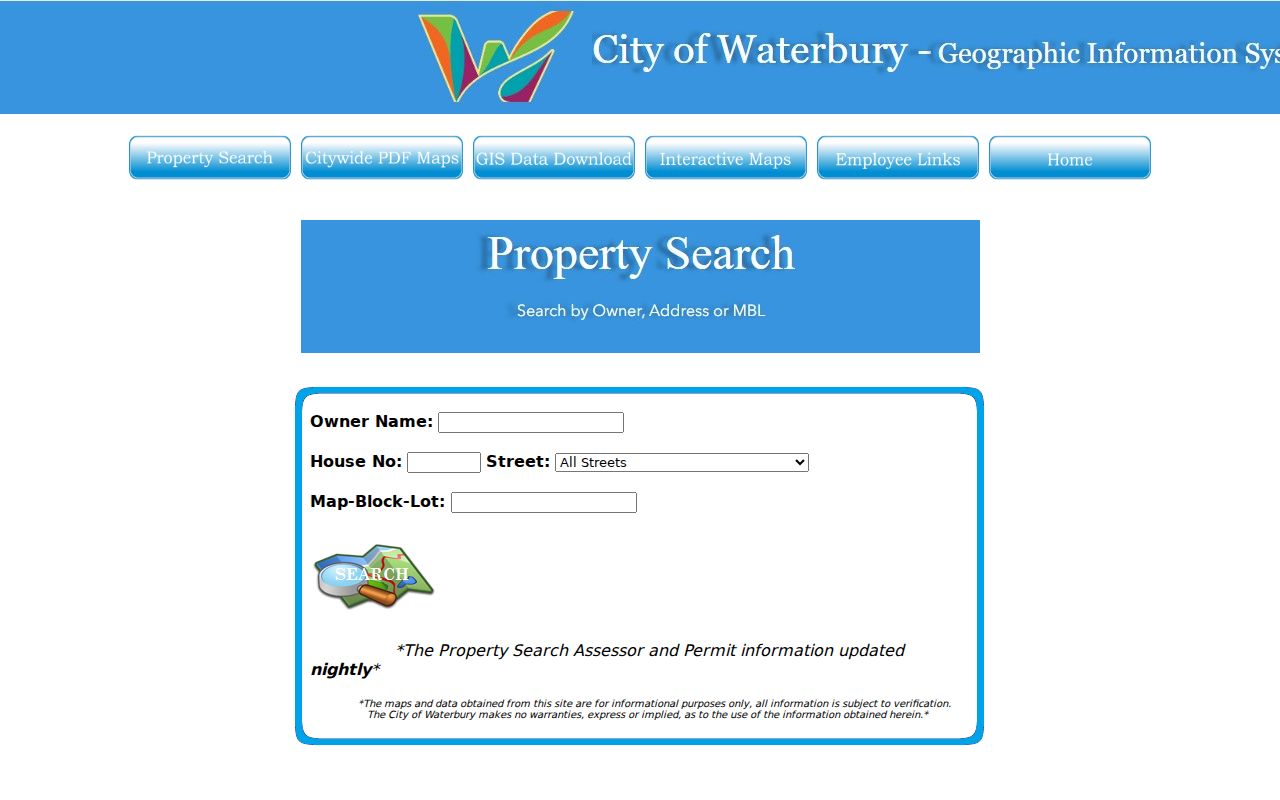
Use one clear field first, then carry the MBL from the result into assessment, sale, permit, and deed research.
| Search field | Best use |
|---|---|
| Owner Name | Find parcels assessed to a named owner |
| House No and Street | Resolve one Waterbury address |
| Map-Block-Lot | Reopen the exact parcel across city systems |
Reading Waterbury Deed Names
The Town Clerk's index records parties to land documents. A grantor is usually the person giving an interest, while a grantee receives it. SearchIQS provides Waterbury's remote route, and the published coverage sheet lists a general index from 1978 forward along with older grantor and grantee books. The online landing also offers guest searching and account options. Image charges can change, and the current self-sign-up screen should not be confused with an older subscription sheet.
A deed name is not the same as a list of occupants. It can identify owners, lenders, estates, and other parties connected to land. Compare the document date and legal description with the city parcel record. In-person help is available at the Town Clerk when a historical book, image, or certification is not clear online.
- Index
- A finding list that points to a recorded document.
- Grantor
- The party conveying an interest.
- Grantee
- The party receiving an interest.
- Parcel
- A mapped unit of land identified by the city.
Waterbury City Contacts by Office
Municipal departments divide records by function. City Clerk Michael Dalton handles municipal and board or commission records at 235 Grand Street, Courtyard Level, and can be reached at 203-574-6744. Town Clerk Antoinette “Chick” Spinelli handles land records, trade names, property registrations, election documents, military discharges, and notary certificates. Vital Statistics handles local birth, death, and marriage copies under Connecticut eligibility rules.
The official Waterbury directory and records contacts provide the city-side starting point.
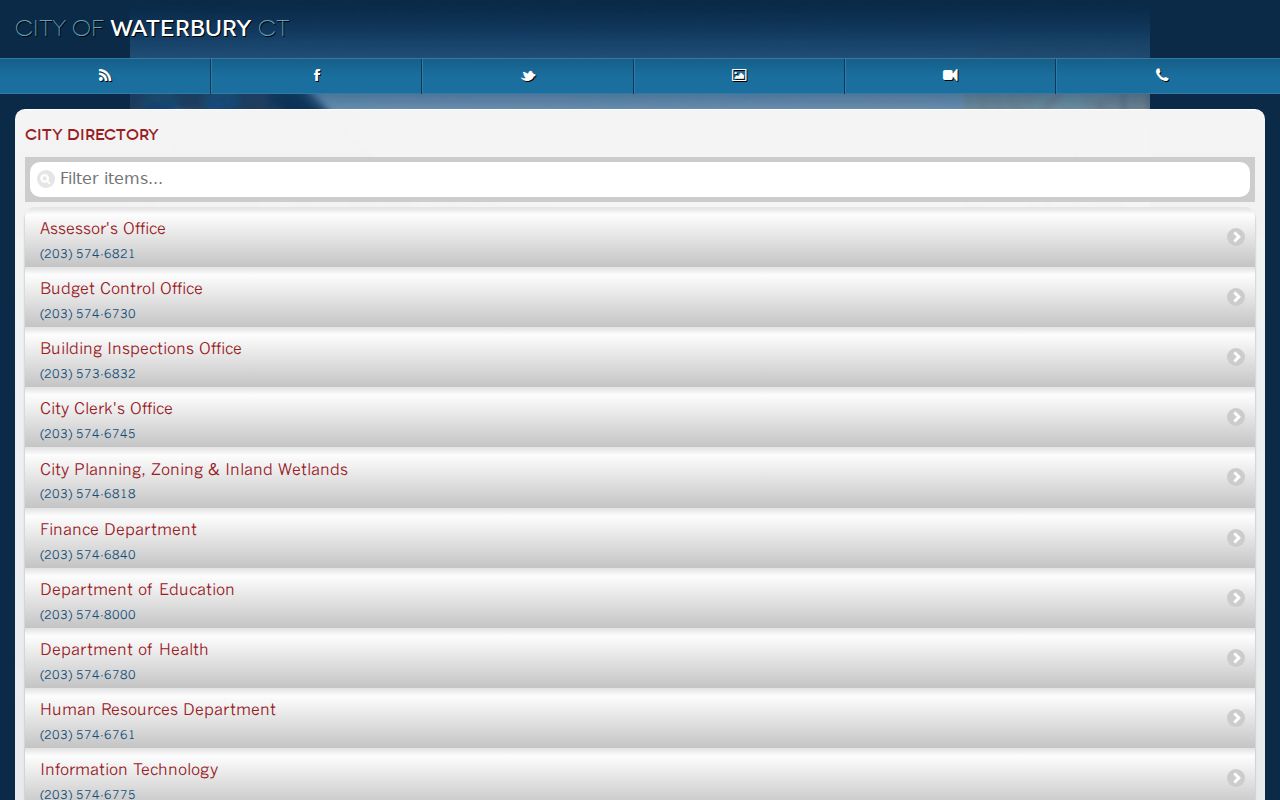
Match the subject to the department before calling. That avoids sending a deed question to the City Clerk or a board-minutes request to the Town Clerk.
Current Waterbury Resident Directories
Current directory-like sources are narrower than the old annual books. Each roll includes people because of a particular act: owning property, registering to vote, filing a deed, holding a state credential, or appearing in a public case. The Waterbury residents directory works best when the source is chosen for that act rather than treated as a complete population list.
| Source | Who It Lists | Keeper | Access |
|---|---|---|---|
| Property roll | Assessed owners | Waterbury Assessor | Free portal |
| Voter status | Registered voters | Connecticut SOTS | Individual lookup |
| Land index | Parties to recorded instruments | Waterbury Town Clerk | Guest search and in person |
| Civil case inquiry | Named civil parties | Judicial Branch | Free online |
| Neighborhood inventory | Association names, not residents | City of Waterbury | Free online |
For one named person, compare two records with a shared Waterbury address or date. The Waterbury resident lookup gives that verification workflow. Avoid assuming that a business agent, deed party, or licensed professional lives at every address shown in a result.
Connecticut Voter Record Boundaries
Connecticut law describes public registration-list fields that can include a voter's name, former name, residential address, former address, voting district, date of birth, party enrollment, registration dates, and voting-history markers. The centralized file is a controlled request product, not an unrestricted browser. The Secretary of the State's official voter lookup is meant for checking an individual's registration status and polling information.
Protected-address rules matter. Connecticut's Address Confidentiality Program gives eligible survivors a substitute mailing address, and protected voter records require different handling. Never infer that a missing public address means a person is unregistered or absent from Waterbury.
Waterbury's registrars carry out local duties, including maintaining the registry and preparing election materials, but the public status search is centralized at the state level. A request for voter-file data follows a separate Secretary of the State process with stated fields, limits, pricing, and CSV delivery. That difference matters: an individual lookup answers a personal registration question, while a file request is a formal access channel. Voting-history markers show participation, not how anyone voted. Former-name and former-address fields may help distinguish two Waterbury residents with similar names, but dates of birth and protected-address details require careful handling.
Use records lawfully. A resident roll may support family research, civic contact, or record correction. It must not be used to watch, threaten, or harass anyone.
Verifying Waterbury Vital Events
Waterbury Vital Statistics issues local birth, death, and marriage copies. Access depends on the event, date, requester's identity, and relationship. Statewide, Connecticut DPH explains the same eligibility rules and provides forms. Birth records before January 1, 2003 are open to adults age 18 or older, but later birth certificates remain restricted. Death certificates are generally available to adults, though Social Security numbers are limited to eligible requesters.
The Waterbury Vital Statistics access page sets out the local route.
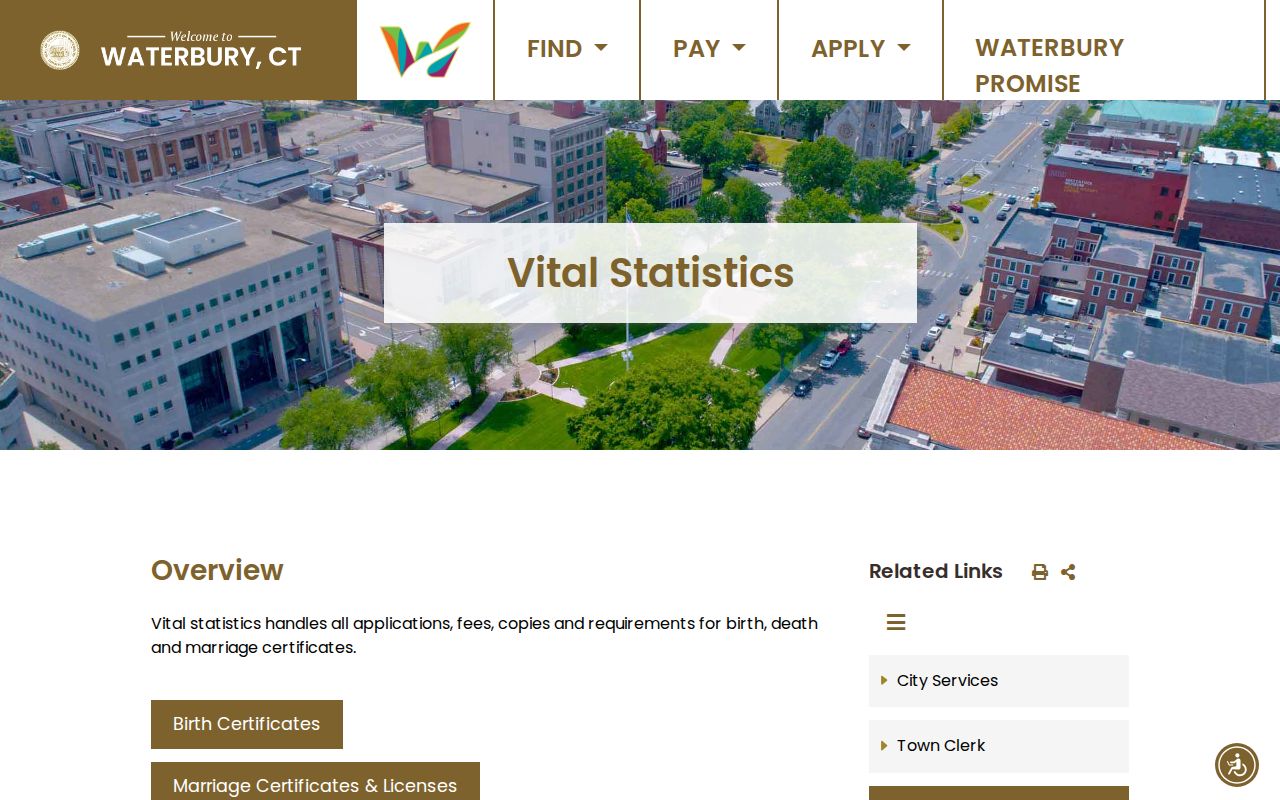
Use the local office when the event occurred in Waterbury or the city holds the record, and check the application before sending identification or payment.
The Connecticut Department of Public Health vital-record portal supplies the statewide fallback.
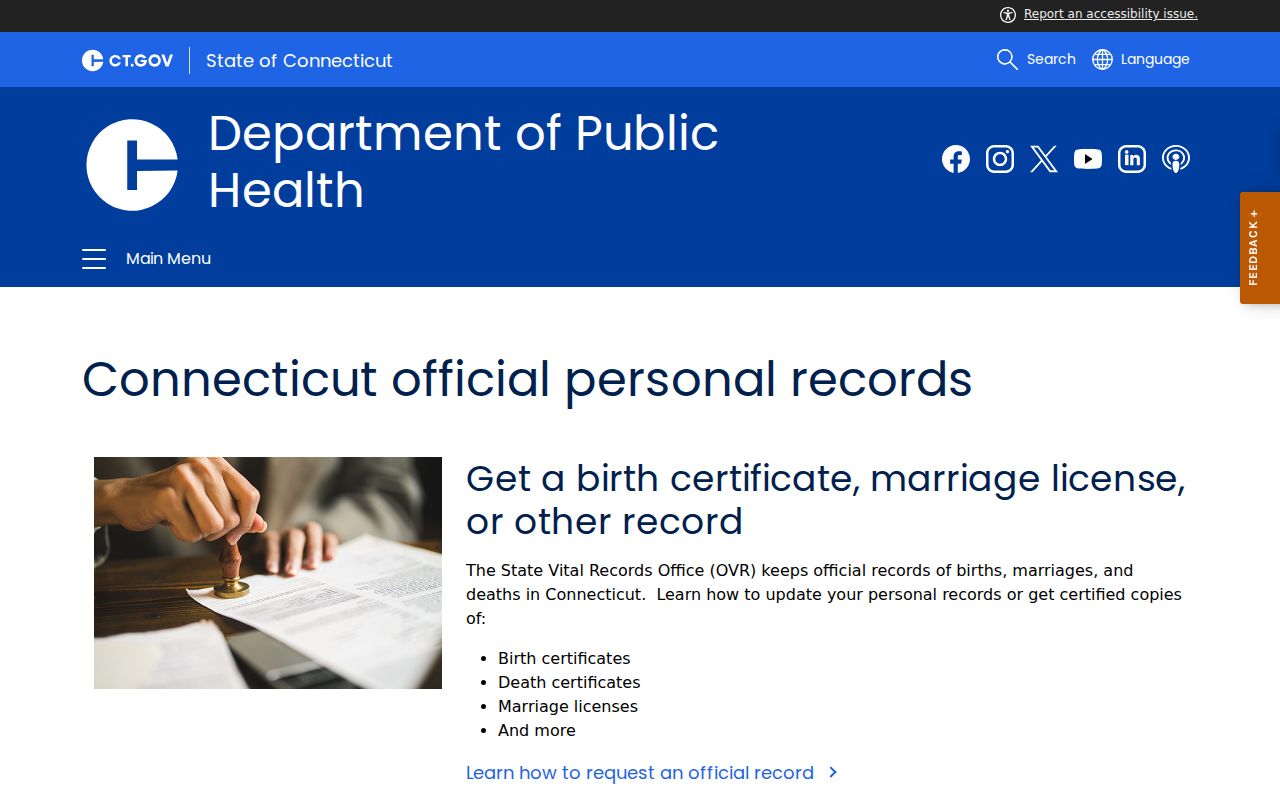
The state page helps distinguish certified-copy eligibility from older genealogy access, which the Connecticut State Library handles for many historical indexes.
Waterbury Names in State Searches
A name may appear outside a traditional directory. Connecticut eLicense searches professional and trade credentials without requiring a login. The business system returns entity and filing details, while CT Big List searches property transferred to the state as unclaimed. These are lead sources, not proof of present residence. A license may show a practice or mailing address, and unclaimed property can preserve an old address.
The Connecticut eLicense lookup shows its occupation, license type, name, city, state, ZIP, county, and credential-number filters.
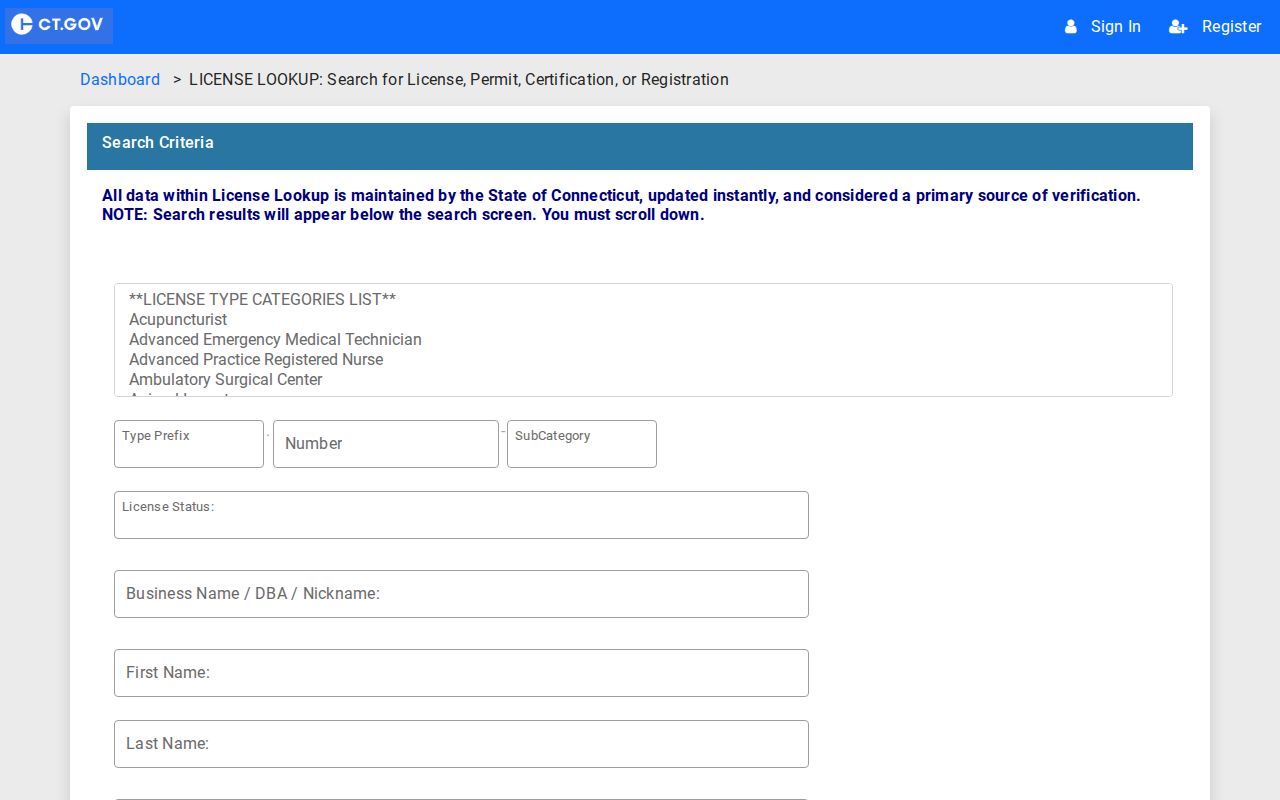
Check the status and expiration fields, then confirm any Waterbury address in a source created for that address.
The Connecticut unclaimed-property search is free and can reconnect a name with a reported address.
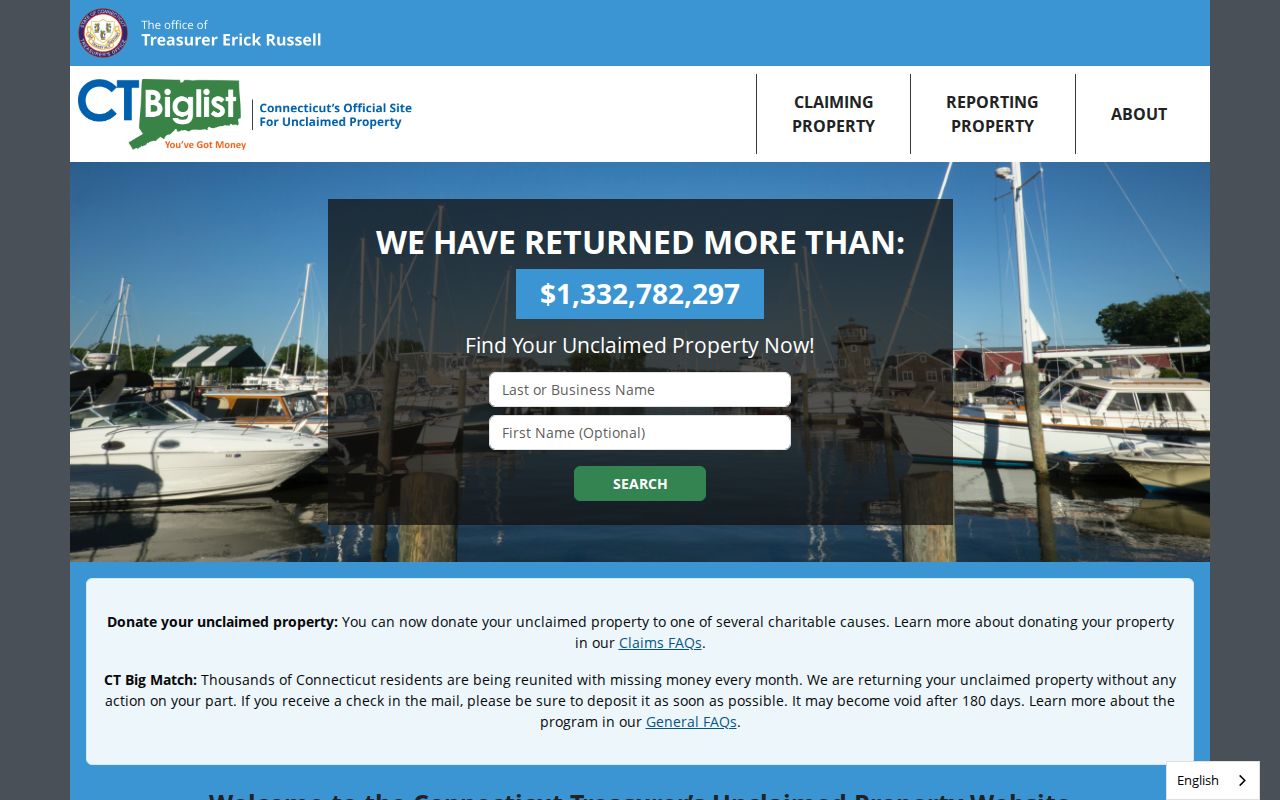
A possible match should be confirmed through the state's claim steps, not treated as a current Waterbury household listing.
Requesting Missing Waterbury Records
When no portal covers the needed record, Connecticut's Freedom of Information Act supplies the fallback. Ask the agency that created or keeps the material. Inspection generally need not begin with a written request, but an agency may require a written request for copies. A clear request names the record series, a short date range, the Waterbury office involved, and the preferred format. Municipal copy charges may reach 50 cents per page, while state copy charges may reach 25 cents per page.
The Connecticut FOI request guidance explains inspection, copy requests, and the appeal route.
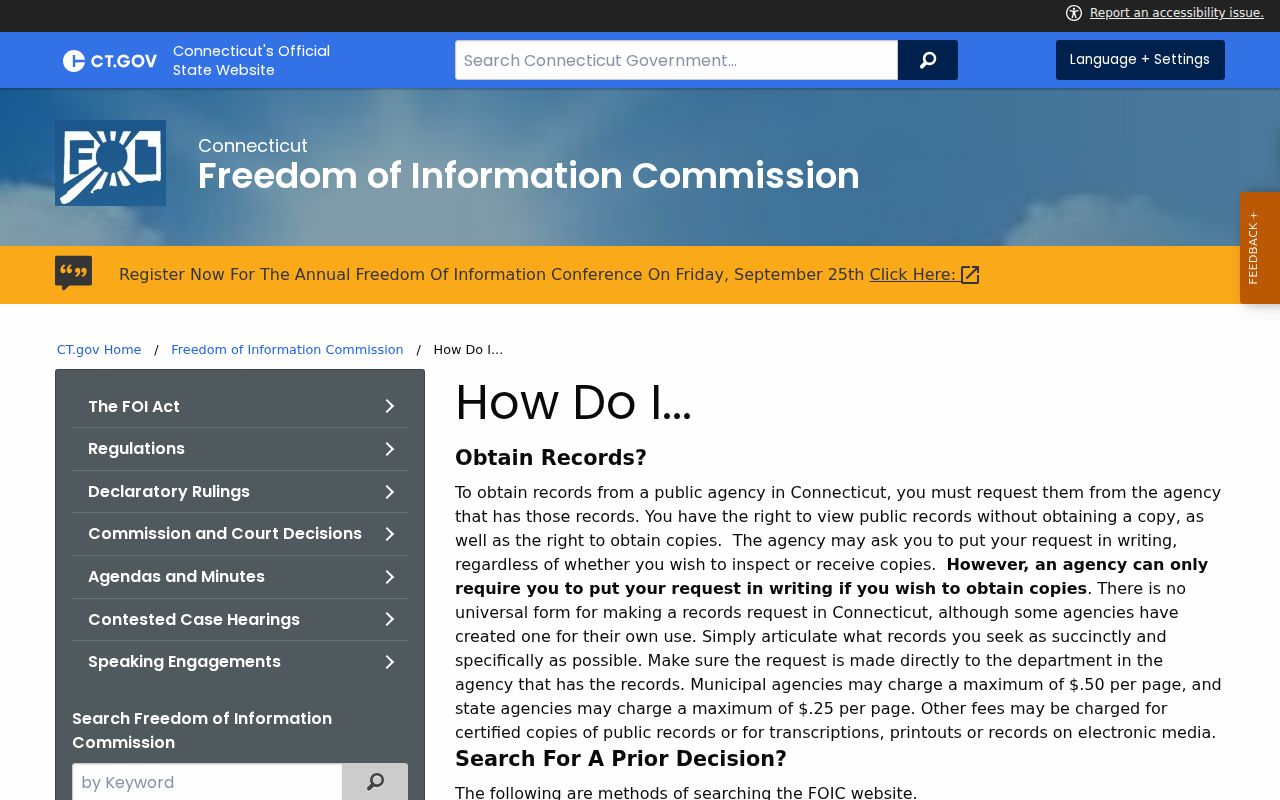
Appeals generally go to the Freedom of Information Commission within 30 days when the statute permits one. Keep the original request and the agency's response.
Historical Waterbury Resident Directories
Silas Bronson Library's Waterbury city directory collection begins with 1868-69 and continues into modern years, with gaps and format changes. The older volumes can list a resident's name, occupation, employer or workplace, spouse, home address, boarding status, and whether a woman was a widow. Business sections and street listings add context. Later criss-cross volumes reverse the search by arranging entries around an address or telephone number.
Read a year as a snapshot, not an exact move date. Publication lag, abbreviations, duplicated names, street-name changes, and Waterbury's 1891 renumbering can break a simple address match. Bronson's map guide covers 1879, 1896, 1909, and 1932 sources, while Library of Congress Sanborn sheets add building footprints for 1890 and 1901. The full collection workflow belongs on the Waterbury city directory page.
Waterbury Neighborhood Names and Limits
Waterbury's official association inventory names the Waterbury Neighborhood Council and groups for Bouley Manor, Brooklyn, Bunker Hill, Bucks Hill, East End, East Mountain, Gilmartin, Historical Hillside, Historic Overlook, Hopeville, South End, Walnut-Orange/Walsh, Town Plot, and Waterville. It is an organizing directory, not a resident roster. Association boundaries, ZIP areas, wards, census geography, and common neighborhood names can overlap without matching.
Use those names to narrow local history, meeting records, planning documents, and newspaper searches. For a present address, confirm the parcel and street first. Waterbury has used changing civic and postal boundaries over time, so a neighborhood label alone does not prove who lived at a specific house.
Local scale also changes the best search order. Waterbury's compact blocks can place several parcels behind one common street label, while condominium units may share a location but carry distinct unit or MBL entries. The property-card portal includes a condominium-complex filter, and its owner search works best with a last name entered first. Search one category at a time before widening the query. For community context, an association name can point toward public meeting notices or planning records, but membership lists may be private and the city inventory does not identify household members.
Historic research needs a second geography check. A place described as Brooklyn, Waterville, or Town Plot in a directory or news item may not follow a current association boundary. Compare the printed street, cross street, directory year, and map year. That method keeps a neighborhood term useful without forcing it into a modern line it never followed.