
Finding Waterbury Residents by Record
Let the starting record follow what you already know. An address belongs in the city GIS or the eQuality property-card search. A name fits other tools. The civil court party inquiry, probate lookup, voter status tool, business search, professional-license lookup, and unclaimed-property search all begin with a person. For a past household, go a different route. The Silas Bronson Library's city directories beat a current parcel card.
Remember what each record proves. A deed shows ownership, not occupancy. A voter entry reflects registration, while a directory captures only what its publisher gathered in one year. Renters, children, recent movers, and people using protected addresses may all be missing. Treat a matching name as a lead. Wait for a second source to agree on an address, date, relative, parcel, or case.
- Enter an owner name, house number, street, or MBL in the Waterbury property systems.
- Use Connecticut's official voter tool when registration status is relevant.
- Search the Town Clerk's grantor and grantee index for transfers tied to the name.
- Check Bronson Library directories when the question concerns an older year or household.
- Send a narrow Connecticut FOI request to the actual custodian if no public index answers the question.
Waterbury Resident Records Offices
New Haven County is a label on the map, not a layer of government. Connecticut abolished county government long ago. No county clerk will hold these records. The Town Clerk records land instruments and election documents. The Assessor and GIS staff keep the property roll and parcel map. Local registrars run voter functions. The Secretary of the State runs the official status lookup and the centralized voter file. The Waterbury street directory shows how those address records connect along a single street.
Waterbury Town Clerk
235 Grand Street, first floor
Waterbury, CT 06702
203-574-6806
Waterbury Assessor
235 Grand Street, Courtyard Level
Waterbury, CT 06702
203-574-6821
Search Waterbury Parcels First
Waterbury GIS accepts Owner Name, House No, Street, and Map-Block-Lot. The MBL is the parcel identifier. One clear field is enough to start. A result then opens assessor facts and building details. It also shows assessed value, sales history, permit information, property maps, and a link to eQuality. That makes the parcel system the strongest first stop for a residents directory search that begins with a street. Its stable identifiers help separate look-alike addresses. The Waterbury GIS search page shows the current entry fields.
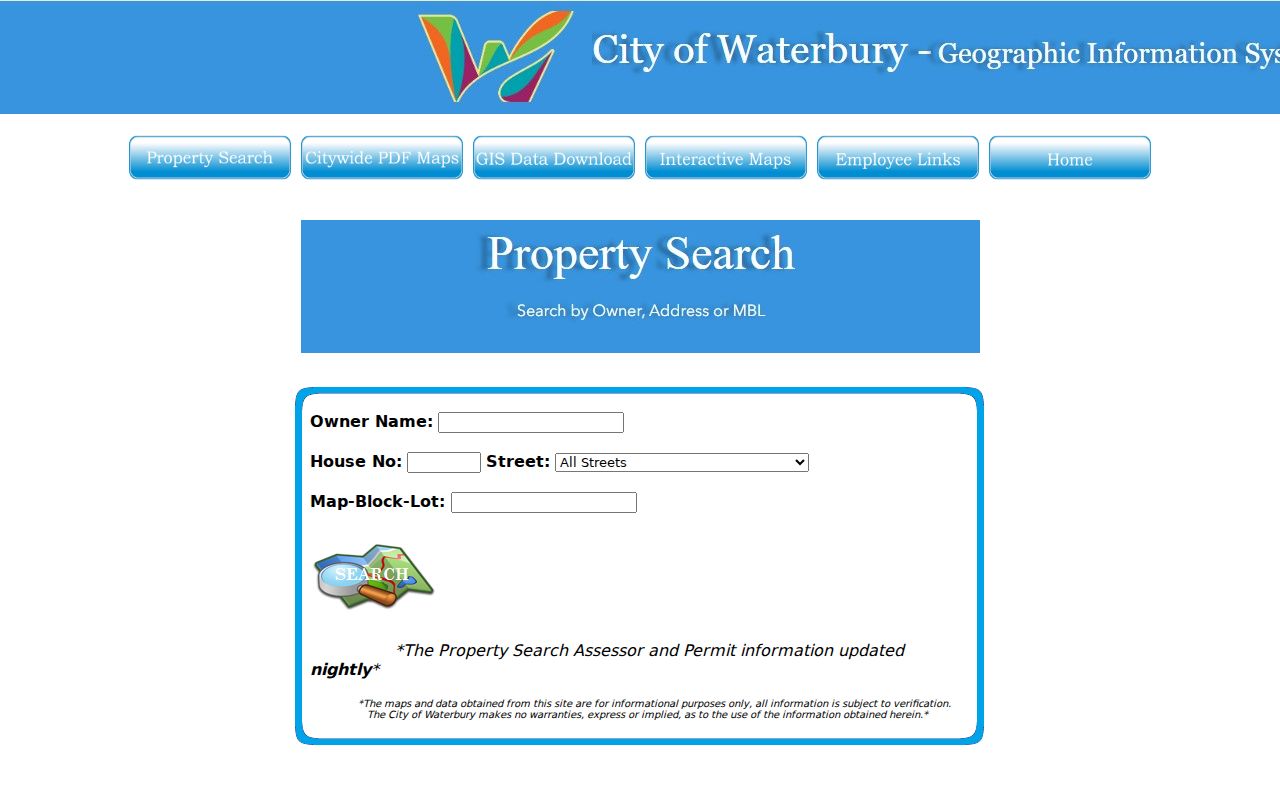
Start with a single clear field. Then carry the resulting MBL into assessment, sale, permit, and deed research.
| Search field | Best use |
|---|---|
| Owner Name | Find parcels assessed to a named owner |
| House No and Street | Resolve one Waterbury address |
| Map-Block-Lot | Reopen the exact parcel across city systems |
Reading Waterbury Deed Names
The Town Clerk's index lists the parties to land documents. A grantor gives an interest. A grantee receives it. SearchIQS is Waterbury's remote route into those records. Its published coverage sheet lists a general index from 1978 forward, plus older grantor and grantee books. The online landing also offers guest searching and account options, though image charges can change and the current self-sign-up screen should not be confused with an older subscription sheet.
A deed name is not an occupant list. It names owners, lenders, estates, and other land parties. Compare the document date and legal description against the city parcel record. When a historical book, image, or certification is unclear online, the Town Clerk can help in person.
- Index
- A finding list that points to a recorded document.
- Grantor
- The party conveying an interest.
- Grantee
- The party receiving an interest.
- Parcel
- A mapped unit of land identified by the city.
Waterbury City Contacts by Office
Match the subject first. Waterbury splits its records by function, not by building. City Clerk Michael Dalton keeps municipal, board, and commission records at 235 Grand Street, Courtyard Level. His office is reachable at 203-574-6744. Town Clerk Antoinette “Chick” Spinelli holds land records, trade names, property registrations, election documents, military discharges, and notary certificates. Vital Statistics issues local birth, death, and marriage copies under Connecticut eligibility rules.
The official Waterbury directory and records contacts page is the city-side starting point.
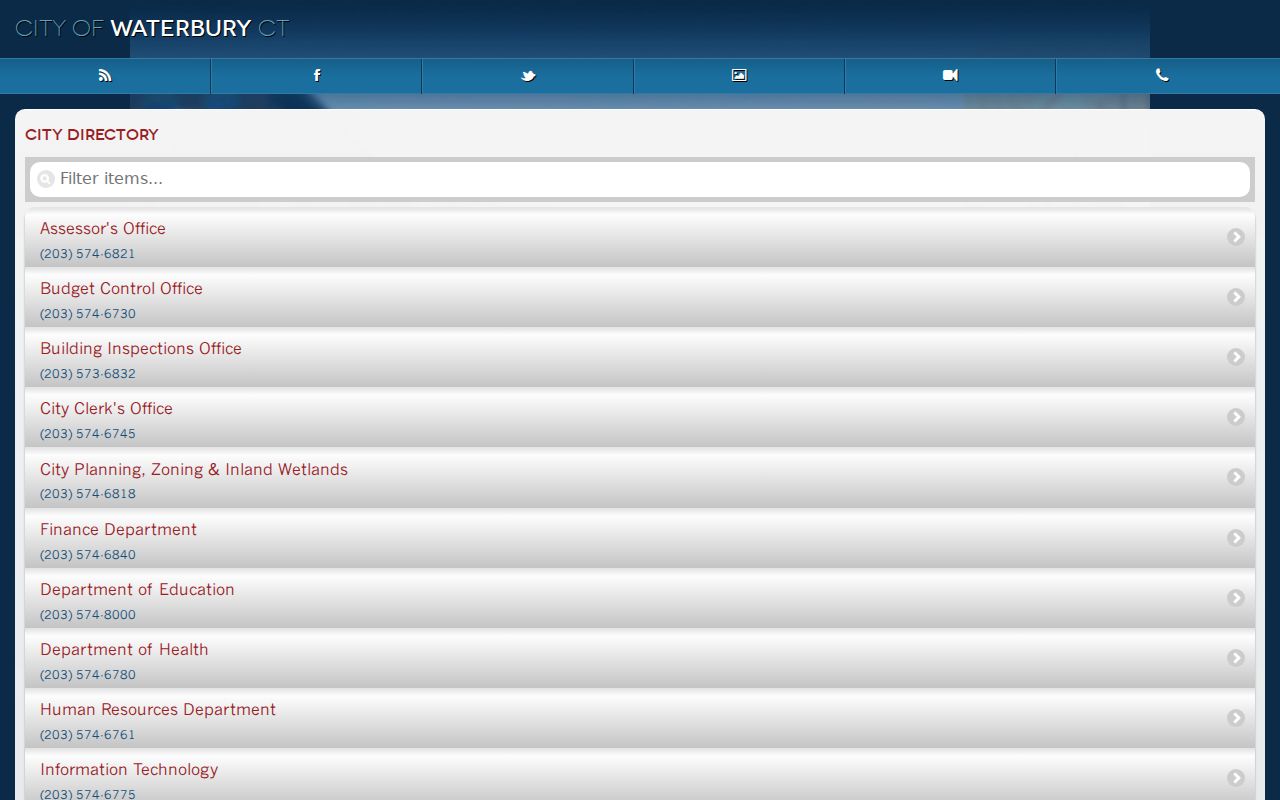
Match the subject to the department before calling. A deed question belongs with the Town Clerk, not the City Clerk, and board minutes run the other way.
Current Waterbury Resident Directories
The old annual books are gone. Nothing today matches their sweep, so current directory-style sources are narrower. Each roll includes a person for a specific act. That act might be owning property, registering to vote, filing a deed, holding a state credential, or appearing in a public case. A Waterbury residents directory works best when matched to that act. Treat none of them as a census.
| Source | Who It Lists | Keeper | Access |
|---|---|---|---|
| Property roll | Assessed owners | Waterbury Assessor | Free portal |
| Voter status | Registered voters | Connecticut SOTS | Individual lookup |
| Land index | Parties to recorded instruments | Waterbury Town Clerk | Guest search and in person |
| Civil case inquiry | Named civil parties | Judicial Branch | Free online |
| Neighborhood inventory | Association names, not residents | City of Waterbury | Free online |
Comparing two records beats trusting one. For a named person, the Waterbury resident lookup gives the workflow of matching two records on a shared Waterbury address or date. An agent or deed party may not live there.
Connecticut Voter Record Boundaries
Connecticut law spells out which voter fields may appear on a public registration list. Names, former names, and addresses qualify. So do districts, birth dates, party enrollment, registration dates, and participation markers. The full file is not a free download. It moves only through a controlled request to the Secretary of the State. The state's own voter lookup serves a narrower purpose. It answers whether one person is registered and where that person votes.
Protected addresses deserve caution. Connecticut's Address Confidentiality Program lets eligible survivors use a substitute mailing address. Those voter records get different handling. A blank address proves nothing. Treat a missing entry as withheld. It is not a sign a Waterbury resident is unregistered or gone.
Waterbury's registrars maintain the local registry and prepare election materials. The public status search, though, sits at the state level. A voter-file request runs through a separate Secretary of the State process. That process has declared fields, limits, pricing, and CSV delivery. An individual lookup answers a personal question; a file request is a formal access channel. Remember what participation markers show. They record that a ballot was cast, never how anyone voted. Former-name and former-address fields help separate two Waterbury residents with similar names. Birth dates and protected-address details still call for careful handling.
Use records lawfully. A resident roll may support family research, civic contact, or record correction. It must not be used to watch, threaten, or harass anyone.
Verifying Waterbury Vital Events
Waterbury Vital Statistics issues birth, death, and marriage copies. Eligibility depends on the event, its date, the requester's identity, and the relationship. Connecticut DPH posts the same statewide rules and forms. Birth records before January 1, 2003 open to adults. Later certificates stay restricted. Death copies generally reach adults, though Social Security numbers go only to eligible requesters. The Waterbury Vital Statistics access page explains the local route.
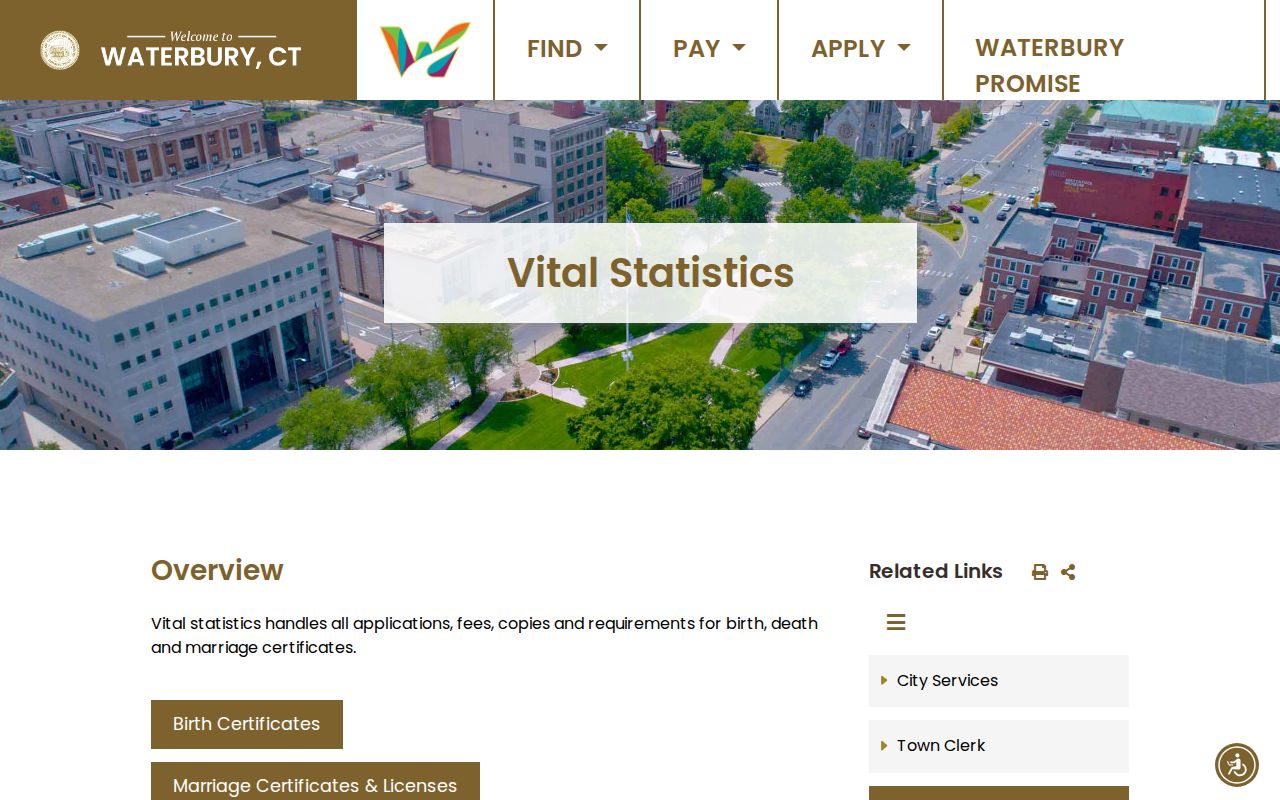
Use the local office for Waterbury events. Check the application before sending any identification or payment. The Connecticut Department of Public Health vital-record portal supplies the statewide fallback.
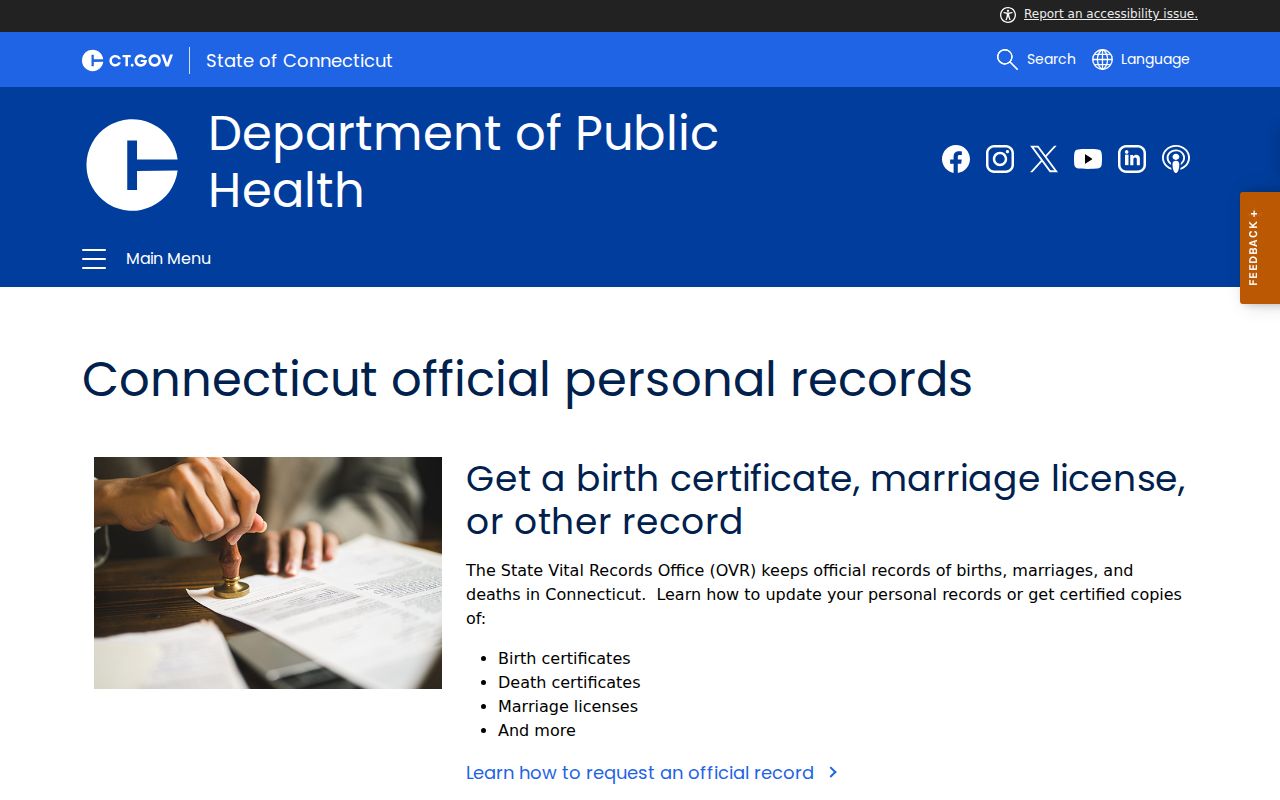
The state page separates certified copies from genealogy access. The Connecticut State Library handles many historical indexes for older records.
Waterbury Names in State Searches
A name can surface well beyond a standard directory. Connecticut eLicense searches trade credentials without a login. The state business system returns entity and filing details. CT Big List tracks property transferred to the state as unclaimed. Treat these as leads, not proof of current residence. A license may list a practice or mailing address, and unclaimed property can preserve an old one.
The Connecticut eLicense lookup filters by occupation, license type, name, city, state, ZIP, county, and credential number.
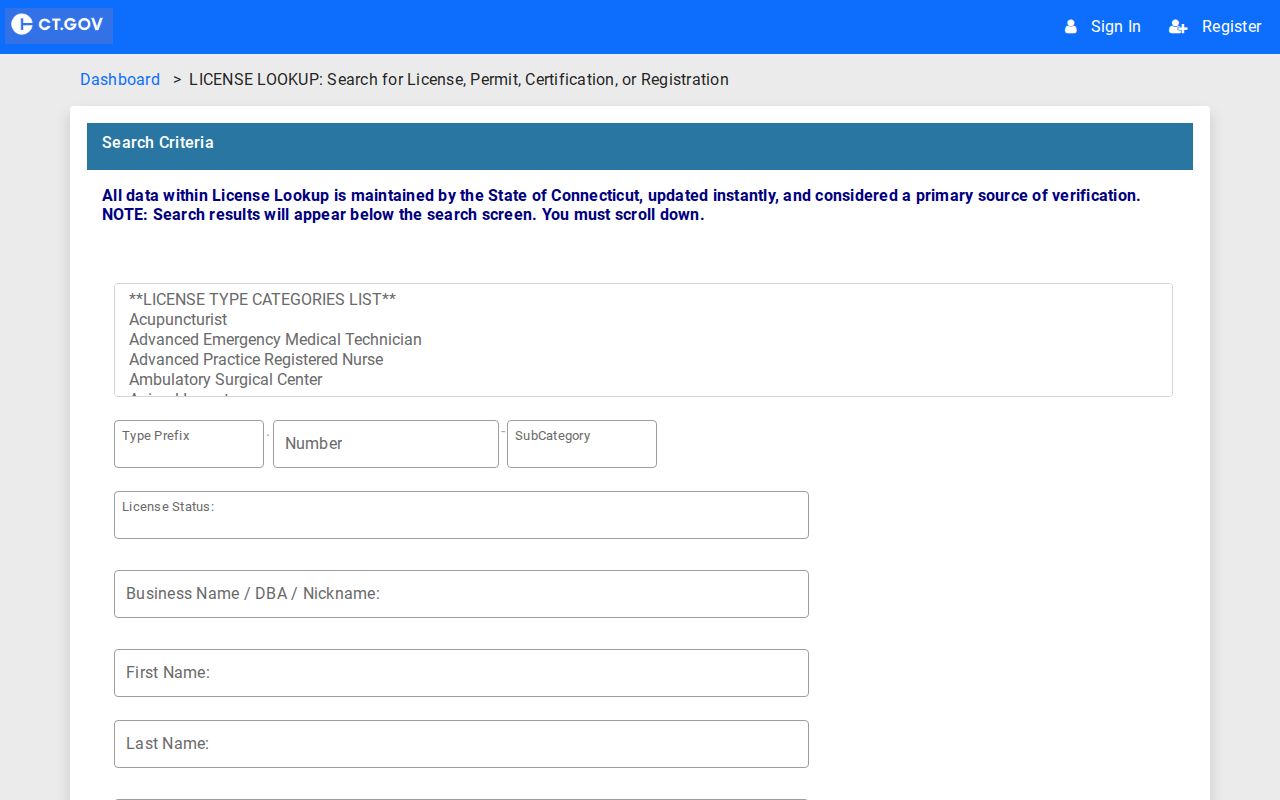
Check the status and expiration fields. Confirm any match in a source built for addresses. The free Connecticut unclaimed-property search can reconnect a name with a reported address.
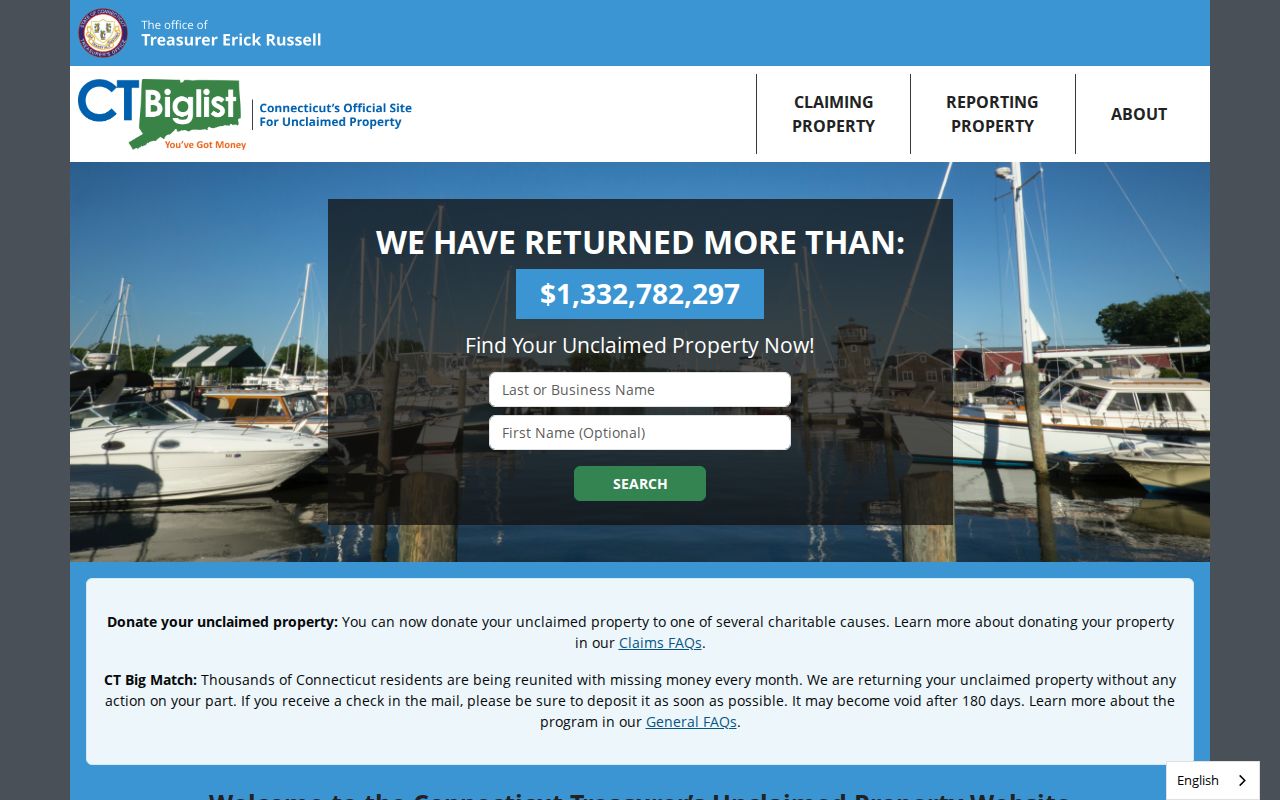
Confirm a possible match through the state's claim steps. It is not a current Waterbury household listing by itself.
Requesting Missing Waterbury Records
No portal covers every record. Connecticut's Freedom of Information Act fills the gap. Direct the request to the agency that created or keeps the material. Inspection usually needs no written request, but copies may. A clear request names the record series, a short date range, the Waterbury office involved, and the preferred format. Municipal copy charges can reach 50 cents per page. State charges top out at 25 cents.
The Connecticut FOI request guidance explains inspection, copy requests, and the appeal route.
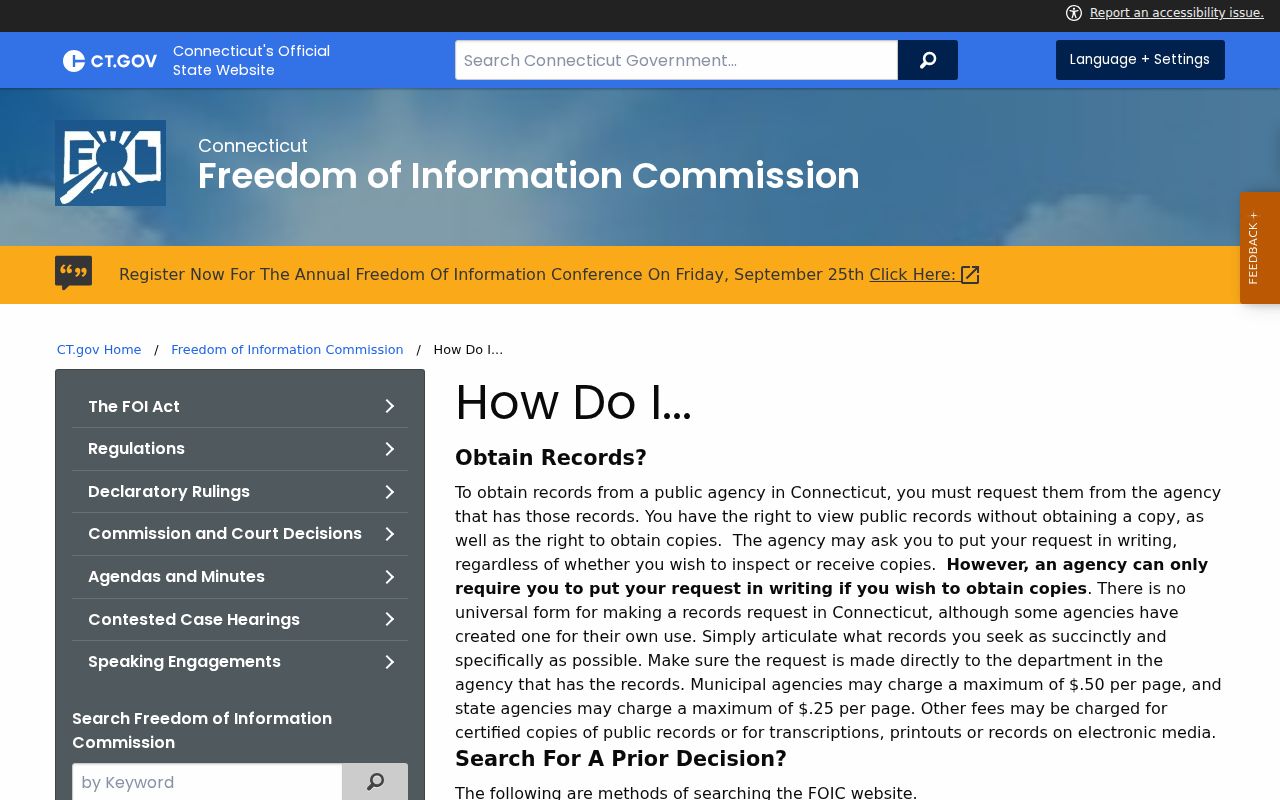
Appeals generally go to the Freedom of Information Commission within 30 days when the statute allows one. Keep the original request and the agency's response.
Historical Waterbury Resident Directories
Silas Bronson Library keeps a deep Waterbury directory collection. It begins with the 1868-69 volume. It runs into modern years, with gaps and format changes along the way. Older volumes can be rich. An entry may list a resident's name, occupation, employer, spouse, home address, boarding status, and widowhood. Business sections and street listings add context. Later criss-cross volumes flip the search, arranging entries by address or phone number.
Read each year as a snapshot. Publication lag, abbreviations, duplicated names, street changes, and Waterbury's 1891 renumbering can break a simple address match. Bronson's map guide covers 1879, 1896, 1909, and 1932 sources. Library of Congress Sanborn sheets add building footprints for 1890 and 1901. The full collection workflow lives on the Waterbury city directory page.
Waterbury Neighborhood Names and Limits
The city keeps an inventory of neighborhood associations. It reads like a map of Waterbury itself. Listed groups include the Waterbury Neighborhood Council. Others cover Bouley Manor, Brooklyn, Bunker Hill, Bucks Hill, East End, East Mountain, Gilmartin, Historical Hillside, Historic Overlook, Hopeville, South End, Walnut-Orange/Walsh, Town Plot, and Waterville. Treat it as an organizing directory rather than a resident roster. Association lines, ZIP areas, wards, census geography, and everyday neighborhood names overlap freely. They rarely match one another exactly.
Those names still earn their keep. Use them to narrow searches through local history, meeting records, planning documents, and old newspapers. For a present-day address, pin down the parcel and street first. Waterbury's civic and postal boundaries have shifted over time. A neighborhood label alone, in other words, never proves who lived at a particular house.
Scale matters too. Waterbury packs a lot into compact blocks. Several parcels can sit behind one common street label. Condominium units may share a location yet carry distinct unit or MBL entries. The property-card portal offers a condominium-complex filter. Its owner search works best with a last name entered first. Search one category at a time. Widen the query only after the narrow pass comes up empty. For community context, an association name can steer you toward public meeting notices or planning records. Membership lists, though, may stay private, and the city inventory never names household members.
Historic work calls for a second geography check. A spot described as Brooklyn, Waterville, or Town Plot in a directory or news item may sit outside today's association boundary. Compare the printed street, the cross street, the directory year, and the map year. That discipline keeps a neighborhood term useful. It never forces the term onto a modern line it never followed.